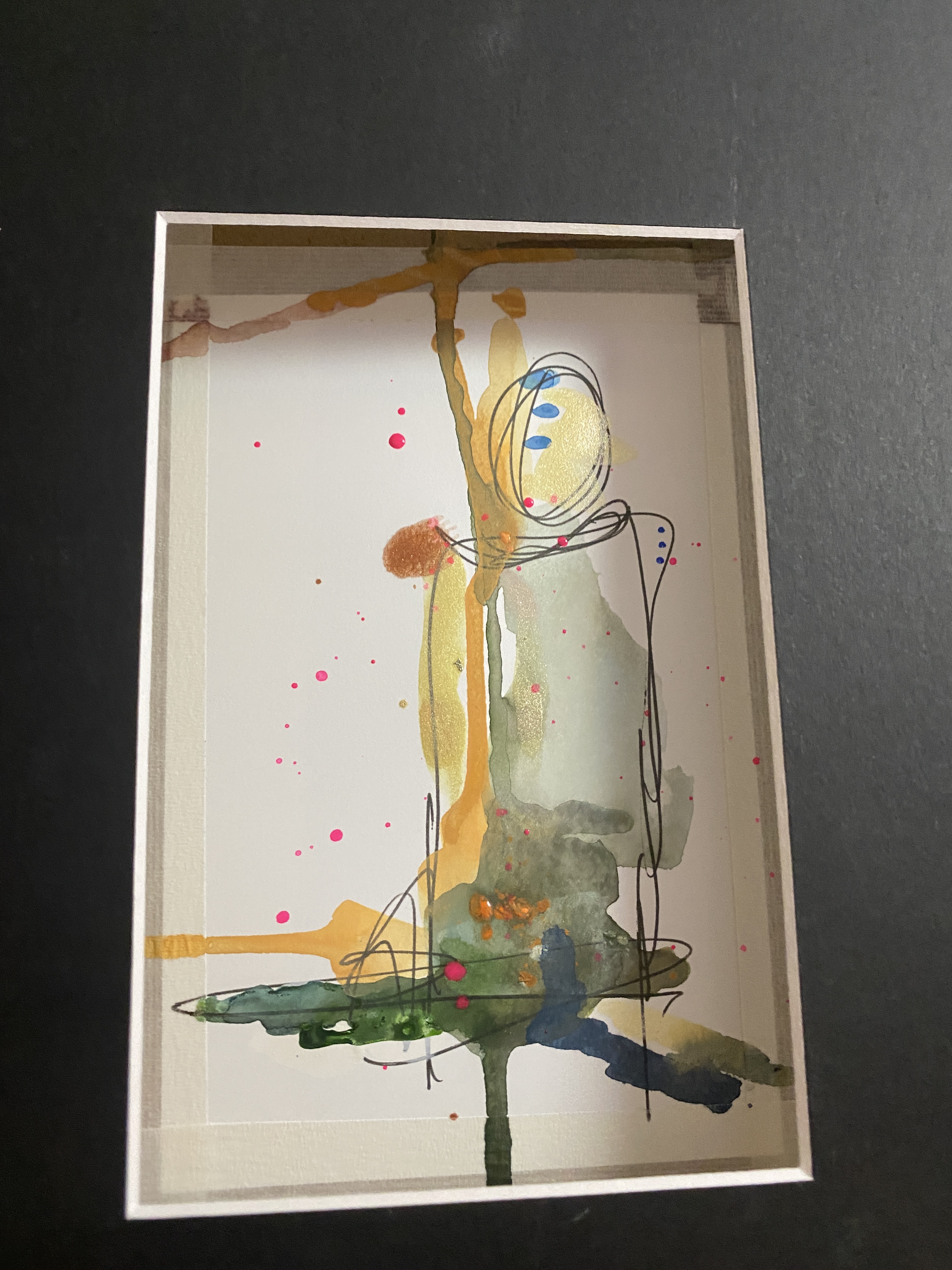
As I’m in transition of roles in my professional and personal life – I’m noticing the between spaces. A lot of life happens in the between spaces, we even have sayings about it like, “it’s about the journey and not the destination.”
There are these liminal spaces on multiple levels in our work as interpreters and educators as well – the space between words, the space between people, the space between gigs, the space between colleagues, etc.
Navigating those between spaces needs tools, trust, and time. The tools may vary depending upon which type of between space is being navigated, of course.
As interpreters, we live in the borderlands between worlds – between groups of people who use different language but need to connect. We live at the edges of events, not participants but in the midst of all that is occurring. We are members of multiple communities and places (see Wenger-Trayner, et al., 2015).
These multiple memberships shape our identity lens as well as our sense of agency. Inhabiting the spaces between can create a challenge for personal coherence. This is emotionally isolating.
As I am currently in a between space, on multiple levels, I’m keenly aware of it and how it impacts sense of self as well as next steps. As I was arting earlier this week, I found a lot of resistance from a sense of “am I even an artist any more?!” But taking a single first step, led to the next one and the next one as it all unfolded. I was reminded that is all that is ever asked of me -to let things unfold, to follow the path a step at a time and respond in each unfolding allowing myself to be shaped along the way to my next iteration of being. I was reminded that is all that is ever asked of me.
The tools I’m using in this space between include reflecting, resting, reading, and listening. The trust I’m exercising (like a muscle) includes not being in charge of all the things that are unfolding, that the shaping I’ve had to this point will be fitting for the next steps and that at just the right timeI’ll know to act and how to do so. Time is my most challenging practice right now – I want things to move quicker, I want to be ot the other side – settled and stable. As I yearn for that, I am also becoming keenly aware that the destination is never final, there is always another journey, another space between, another liminal space to explore, endure, and engage.
This is the work of the interpreter, too. Not just in the liminal space of the assignment — but in the larger arc of a career. We are always in some version of this. Between roles, between certainties, between who we were and who we are becoming. Navigating the spaces between requires intention and often a guide and thinking partner.
References
Wenger-Trayner, E., & Wenger-Trayner, B. (2014). Learning in a landscape of practice: A framework. In Learning in landscapes of practice (pp. 13-30). Routledge.
 Amanda's Musings
Leave a comment