Author: ARS
-
Ep. 4 – TCI: Connecting to Self via Conditioned Tendencies
Listen on Apple Or Spotify Presence Based Coaching Coaches Rising – The Power of Embodied Transformation Somatic Practices in Interpreter Online Course Download “The Connected Interpreter” handout Watch in ASL Hi. Welcome to the connected interpreter podcast, where we will explore ways of staying connected to ourselves in our work, acknowledging the impact of our…
-
Ep. 3 – TCI: Connecting to Self via Presence
Listen on Apple Or Spotify Presence Based Coaching Coaches Rising – The Power of Embodied Transformation Somatic Practices in Interpreter Online Course Download “The Connected Interpreter” handout Watch in ASL Hi. Welcome to the connected interpreter podcast, where we will explore ways of staying connected to ourselves in our work, acknowledging the impact of our…
-
Ep. 2 – TCI: Connecting to Self
Listen on Apple Or Spotify Somatic Practices for Interpreter Online Course Download “The Connected Interpreter” handout Watch in ASL Hi. Welcome to the connected interpreter podcast, where we will explore ways of staying connected to ourselves in our work, acknowledging the impact of our practices and continue to grow as practice professionals. I’m Amanda Smith,…
-
Ep. 1: Introducing The Connected Interpreter Podcast
Listen on Apple Or Spotify Download “The Connected Interpreter” handout Watch in ASL Hi, welcome to the connected interpreter podcast, where we will explore ways of staying connected to ourselves in our work, acknowledging the impact of our practices and continuing to grow as practice professionals and as humans. I’m Amanda Smith, an interpreter, educator,…
-
Form vs. Meaning
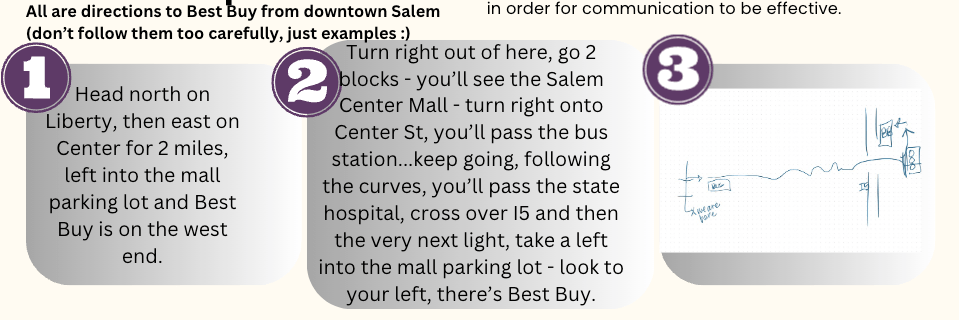
In the recent reading you had about “Toward a Cognitive Model of Interpreting” by Wilcox & Shaffer, you were introduced to the toolmaker paradigm. That is a great way of thinking about the difference between form and meaning…the meaning is the idea, thought, action, or goal – the form is HOW we think we can…
-
Data Collection Mindset
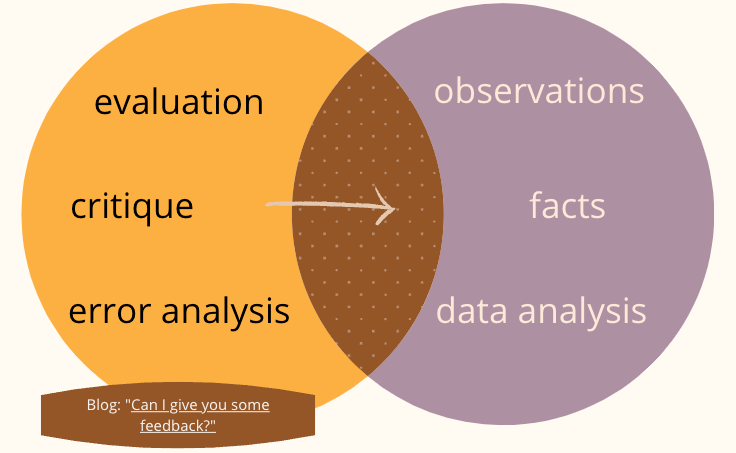
Feedback is external approval or disapproval. Typical feedback sounds like – “I liked this about what you did” or “This didn’t work because you did….” Critique is a critical part of feedback – as the person giving feedback, I think I need to find something wrong in order to feel useful. I need to give…
-

One degree Better: makes a world of difference
In sailing, among other disciplines I would think, there is the concept of “one degree.” The idea that if you are off by one degree here, in 60 miles (or some distance/amount of time) you will be off your target by 1 mile. That’s huge. Now, how can we apply that in professional development and…
-

Modes of Interpretation: Viable for the Real World
There are a number of modes in which interpreting can take place. The common ones are sight translation, consecutive interpreting, and simultaneous interpreting. There is a common practice in interpreter education to start with translation (maybe not even including sight translation)to slow the process down and allow each portion to have its own time and…
-

Conceptualizing Interpreting Work
a timeline Click on the picture above to view it larger, this is a brief timeline I created to encapsulate the history of signed language interpreting in the US to this point. It shows the continual advancement in understanding the complexities of the work of interpreting. (originally published in Amanda’s Musings museletter, Volume 1, Issue…
-

Explicitation vs. Expansion
Linguistic vs. ethical constructs Continuing the conversation… Fund of Information (FOI): Positive & Negative Autonomy (originally published in Amanda’s Musings museletter, Volume 1, Issue 1, Feb 2023)
 Amanda's Musings