Category: Blog
-
🌫️🫧Unfolding the Space Between
As I’m in transition of roles in my professional and personal life – I’m noticing the between spaces. A lot of life happens in the between spaces, we even have sayings about it like, “it’s about the journey and not the destination.” There are these liminal spaces on multiple levels in our work as interpreters…
-
Value Something Higher
I’ve had a number of students over the years concerned about being “triggered” in their practicum placements. Triggered by the topics or ways in which people express themselves. This concern spread to internship when students left their “home” areas and traveled to another part of the country that they may or may not have ever…
-
Form vs. Meaning
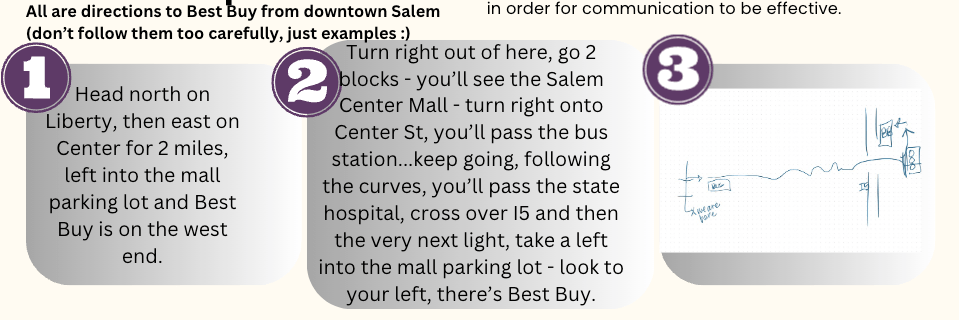
In the recent reading you had about “Toward a Cognitive Model of Interpreting” by Wilcox & Shaffer, you were introduced to the toolmaker paradigm. That is a great way of thinking about the difference between form and meaning…the meaning is the idea, thought, action, or goal – the form is HOW we think we can…
-
Data Collection Mindset
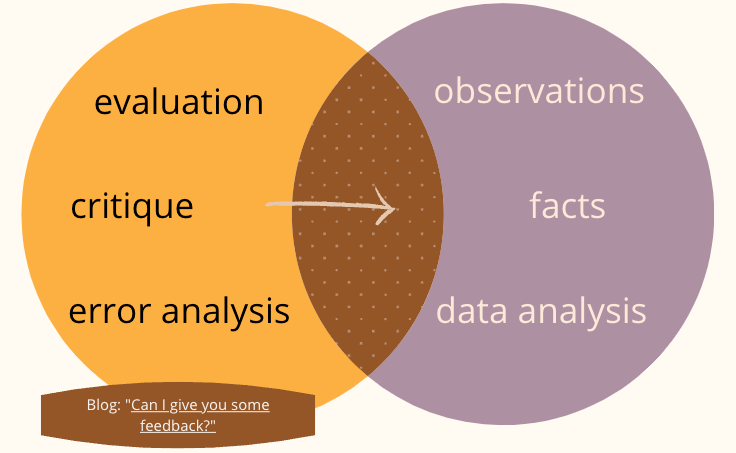
Feedback is external approval or disapproval. Typical feedback sounds like – “I liked this about what you did” or “This didn’t work because you did….” Critique is a critical part of feedback – as the person giving feedback, I think I need to find something wrong in order to feel useful. I need to give…
-

One degree Better: makes a world of difference
In sailing, among other disciplines I would think, there is the concept of “one degree.” The idea that if you are off by one degree here, in 60 miles (or some distance/amount of time) you will be off your target by 1 mile. That’s huge. Now, how can we apply that in professional development and…
-

Modes of Interpretation: Viable for the Real World
There are a number of modes in which interpreting can take place. The common ones are sight translation, consecutive interpreting, and simultaneous interpreting. There is a common practice in interpreter education to start with translation (maybe not even including sight translation)to slow the process down and allow each portion to have its own time and…
-

Conceptualizing Interpreting Work
a timeline Click on the picture above to view it larger, this is a brief timeline I created to encapsulate the history of signed language interpreting in the US to this point. It shows the continual advancement in understanding the complexities of the work of interpreting. (originally published in Amanda’s Musings museletter, Volume 1, Issue…
-
Teaching with Isolation
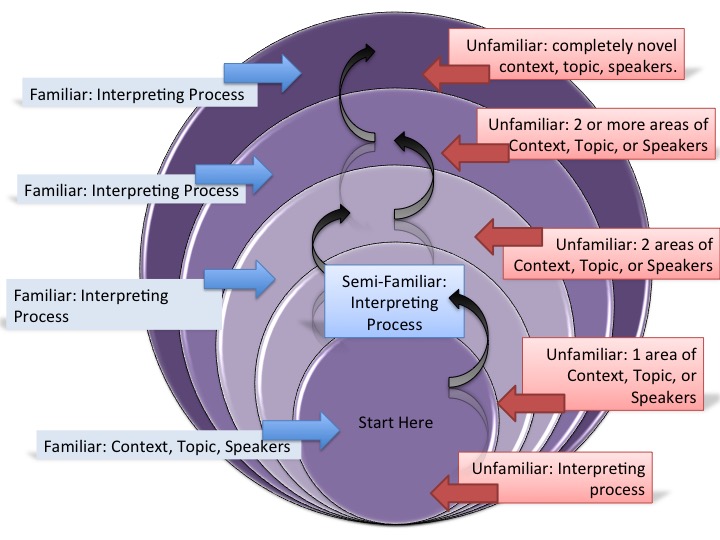
ISOLATING ASPECTS OF THE PROCESS The idea behind this proposed “Learning Model” is that students need an opportunity to isolate the skills they are developing. So, rather than having them overwhelmed with all new things – new content, new speakers, new topics, new mental processes – I’m wanting us to explore the idea of isolating…
-

Why I don’t assign “cold” material
AND WHY I MIGHT…. It is not uncommon for job applications, internship applications, and even credentialing exams (historically) to request samples of “cold” material interpreted. Given my understanding of communication, connection, and the interpreting process, I do not assign “cold” material. “Cold” work refers to the interpretation of materials that are randomly selected and viewed…
-
Museletters
I have been creating museletters for my students the past 2 or so years…. I’ve decided to house them in a different way and share them on a wider basis. Stay tuned…
 Amanda's Musings